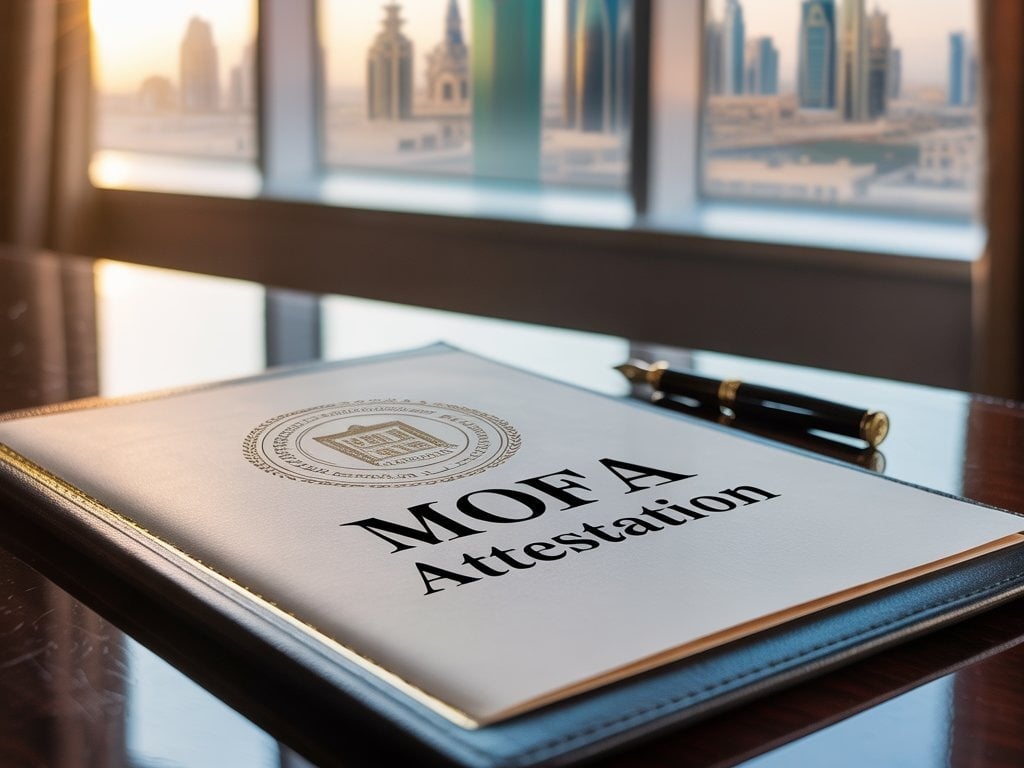
Easy Document Legalization & MOFA Attestation
Simplify your document legalization process with our expert MOFA attestation services and comprehensive consultation support. Ensure your documents are ready for international use effortlessly.
9/10/20258 min read

Understanding Document Legalization
Document legalization refers to the process of verifying a document's authenticity so that it can be recognized and accepted in a foreign country. This procedure is essential in international transactions and legal matters, as different countries have varying standards regarding the recognition of foreign documents. By having a document legalized, individuals and businesses ensure that their paperwork meets the necessary requirements set forth by foreign authorities.
Numerous types of documents typically require legalization. Educational certificates are a prime example, as they often need validation when individuals seek employment or further education abroad. Similarly, business documents, including contracts, incorporation papers, and financial statements, must be legalized to confirm their legitimacy, particularly when entering into international agreements or partnerships. Additionally, personal documents such as birth certificates, marriage certificates, and divorce decrees may also require legalization for various purposes, including immigration, residency applications, or the settlement of estates.
The significance of document legalization lies in its role in facilitating trust and legal recognition across borders. When a document is legalized, it demonstrates that the authorities in the issuing country have verified its authenticity, providing reassurance to the receiving entity that the document is valid and credible. This process not only streamlines international dealings but also helps to prevent potential legal disputes arising from the acceptance of fraudulent or unverified documents. In summary, understanding the importance of document legalization is crucial for anyone involved in international transactions or legal matters, as it directly impacts the ability to navigate complex legal landscapes effectively.
The Role of MOFA in Document Attestation
The Ministry of Foreign Affairs (MOFA) plays a pivotal role in the document attestation process, serving as a key authority that verifies the authenticity of legal documents intended for use abroad. MOFA attestation is essential for ensuring that documents such as educational certificates, commercial invoices, and personal identification are internationally recognized and legally valid. This validation is crucial for various purposes, including employment, marriage, immigration, and business transactions outside the country's borders.
The process of attesting documents through MOFA typically begins with the notarization of the documents by an authorized notary public. This step is fundamental, as MOFA requires that documents be legal and authentic before they proceed for attestation. Subsequent to notarization, the documents must be submitted to the relevant government authority, often a Ministry or Department, for initial verification. After this step, the documents can be forwarded to MOFA for formal attestation.
In terms of requirements, specific criteria must be fulfilled to ensure a smooth attestation process. It is vital that the documents are complete and include all necessary signatures, stamps, and seals. Additionally, applicants may be required to submit personal identification and complete application forms, which can vary based on the document type being attested. Common documents that are attested by MOFA include educational transcripts, legal contracts, commercial documents, and birth or marriage certificates.
The significance of MOFA attestation cannot be overstated, as it not only verifies the legitimacy of the documents but also facilitates their acceptance by foreign governments and institutions. Without this attestation, documents may be deemed invalid or rejected outright, leading to potential complications for individuals and businesses engaging in international activities. As globalization continues to broaden, understanding the role of MOFA in document attestation becomes increasingly important for anyone dealing with cross-border documentation.
Step-by-Step Process of MOFA Attestation
The process of obtaining Ministry of Foreign Affairs (MOFA) attestation is crucial for validating documents intended for use internationally. This guide outlines the necessary steps to ensure a smooth attestation process.
Firstly, adequate preparation of your documents is vital. Ensure that all required documents, such as educational certificates, marriage certificates, or employment letters, are complete and accurate. It is often advisable to get these documents attested by relevant authorities such as the Ministry of Education for educational certificates or the Ministry of Interior for personal documents prior to approaching MOFA.
Once your documents are prepared, you should visit the official MOFA website to understand the specific submission requirements. Typically, an attestation application form needs to be filled out specifying the type of documents and the purpose of attestation. Along with these forms, you will need to submit the original documents and copies, as well as any additional documents that may support your application, such as identification proof or a cover letter.
The next step involves the payment of applicable fees, which vary depending on the type of documents being attested. Payment can usually be made online or at designated banks. It is advisable to keep all payment receipts as these will be required during the submission process.
Processing times for MOFA attestation can differ based on the category of the document and the volume of applications received. Generally, applicants can expect processing to take anywhere from a few days to a couple of weeks. After submission, you can track the status of your application through the MOFA tracking system available on their website, which provides timely updates regarding the progress of your attestation.
In conclusion, by following these systematic steps, individuals can effectively navigate the MOFA attestation process, ensuring their documents meet international standards for recognition and acceptance.
Common Challenges in Document Legalization
Document legalization is a critical step for individuals and organizations seeking to validate the authenticity of documents for international use. However, this process is often riddled with challenges that can complicate the experience, prolong timelines, and ultimately lead to significant setbacks. One of the most common challenges encountered during document legalization is the rejection of documents. This can occur for a variety of reasons, including improper document formats, errors in translation, or failure to include necessary supporting documents. To mitigate these issues, it is essential to ensure that all documents are meticulously prepared and comply with the specific requirements set forth by the receiving authorities.
Another prevalent challenge is misunderstanding the legal requirements involved in the document legalization process. Different countries, as well as various states within those countries, may have unique regulations governing the legalization of documents. Individuals and organizations often find themselves confused or unaware of these nuances, leading to missteps that can delay the process. Consulting with legal experts or professionals in document legalization can provide clarity on the legal landscape, enabling individuals to navigate requirements more successfully.
Handling multiple regulations across different jurisdictions also poses a significant challenge. When documents need to be legalized for use in several countries, understanding the specific laws governing each jurisdiction can be daunting. This can lead to inconsistent compliance and further complications during the legalization process. To navigate this, individuals are advised to conduct thorough research or seek specialized consultation services that are well-versed in international law, ensuring a smoother pathway to document legalization.
By being aware of these common challenges, individuals and organizations can take proactive measures to avoid pitfalls in the document legalization process, thereby saving time and resources while achieving their goals effectively.
Consultation Support: Choosing the Right Service
When embarking on the journey of document legalization and MOFA attestation, seeking professional consultation support is crucial. The intricate nature of legal processes can often be overwhelming, which is why choosing the right service can significantly ease the burden. An expert consultation service can provide valuable insights into the specific requirements associated with the attestation process, ensuring that individuals are well-prepared to navigate the complexities involved.
First and foremost, it is essential to evaluate the experience of the consultation service. Professionals with a proven track record in document legalization understand the nuances of different legal systems and can offer tailored advice based on individual circumstances. Look for consultants who have successfully assisted clients with similar needs, as this prior experience is a strong indicator of their capability to handle complex requests efficiently.
Additionally, consider the range of services offered by the consultation provider. A comprehensive service will not only guide clients through the MOFA attestation process but may also assist with document preparation, submission, and follow-up, effectively streamlining the entire process. Furthermore, an established service often maintains strong relationships with relevant government bodies, which can expedite the processing of documents.
The benefits of hiring experienced professionals cannot be overstated. They can help clients avoid common pitfalls that may lead to delays or rejections in the attestation process. Their expertise can also mitigate stress, allowing individuals to focus on other important matters while knowing that their document legalization is in capable hands. As clients assess their options, it is advisable to seek testimonials and reviews from previous clients, providing further assurance of the service's reliability and effectiveness.
The Impact of Digitalization on Document Legalization
The advancement of technology and the surge of digitalization have significantly transformed the process of document legalization, particularly concerning MOFA attestation. Traditionally, document legalization involved manual submission and verification procedures that often required physical presence at various governmental offices. However, digital advancements have streamlined these processes, making them more efficient and accessible.
One of the most notable developments is the introduction of online services for document legalization. Numerous governments and private agencies now offer platforms where individuals can submit documents electronically for verification and attestation. This shift not only saves time but also reduces the workload on administrative staff, allowing for quicker processing and fewer errors. The integration of online platforms enhances the entire experience, offering real-time tracking and status updates, which were previously nonexistent in a conventional setup.
Moreover, the utilization of electronic documents plays a vital role in the modernization of the legalization process. Documents can now be submitted in digital formats, which decreases the need for physical paperwork, thereby promoting a more sustainable approach. This transition to digital documentation ensures that the verification process becomes faster and more secure, as electronic documents can be authenticated through digital signatures and blockchain technology, ensuring data integrity and minimizing fraudulent activities.
The emergence of e-governance further accentuates the impact of digitalization on document legalization. Governments are increasingly adopting e-governance strategies to enhance public service delivery. This includes the seamless integration of various governmental departments involved in the attestation process, promoting interconnectivity and collaboration. Consequently, these digital initiatives not only improve the efficiency of the MOFA attestation process but also contribute to a more transparent and user-friendly system.
As we look towards the future, it is evident that digital solutions will play a pivotal role in shaping the landscape of document legalization. The convenience and efficiency offered by these advancements present a promising outlook for individuals and businesses alike, illustrating a significant departure from the traditional methods of document processing.
Conclusion and Final Thoughts
In the realm of international transactions and legal agreements, the importance of proper document legalization cannot be overstated. Document legalization serves as a crucial step in validating documents, ensuring they are recognized and accepted by foreign authorities. Among various processes involved, MOFA attestation holds significant importance. This procedure not only verifies the authenticity of documents but also bolsters the credibility of individuals and businesses dealing across borders. It is essential to approach these requirements with a clear understanding, as any oversight can lead to unnecessary delays and complications.
The key takeaways highlighted throughout this article emphasize the need for meticulous attention to detail when preparing for document legalization. The role of MOFA attestation is integral, providing assurances of a document's validity in foreign jurisdictions. As such, being proactive in addressing these requirements can save time and streamline the process. Furthermore, it is advisable to consider seeking professional consultation support. Engaging with experts can provide invaluable insights and assistance, ensuring that all necessary steps are followed diligently.
As readers reflect on the information presented, it is crucial to recognize the urgency of addressing document legalization needs. In today's interconnected world, the ability to present legally accepted documents can significantly impact various aspects of personal and professional life. Therefore, it is encouraged to take the necessary steps towards ensuring documents are legalized efficiently. Whether through MOFA attestation or consulting with experts, a well-planned approach can greatly simplify the process. By taking action, individuals can safeguard their interests and avoid potential pitfalls, fostering a smoother transition into international endeavors.
Attestation
Expert guidance for MOFA document attestation.
Contact us on:-
Services
+91 92107 76391
© 2025. All rights reserved.